
Table of Contents
- 1. Introduction
- 2. Why Indian Students Choose Romania for MBBS
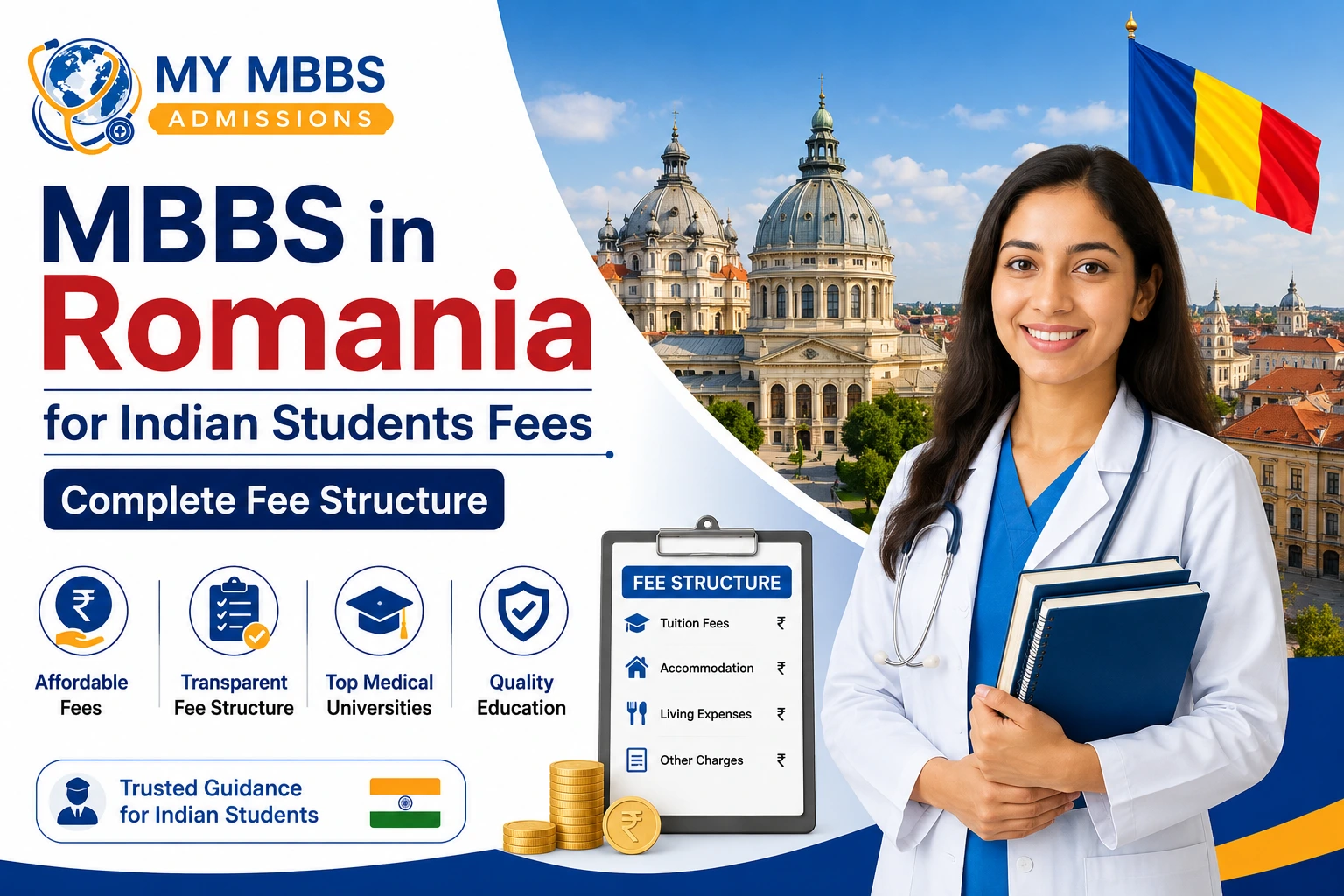
- 3. MBBS in Romania for Indian Students Fees
- 4. Scholarships and Financial Assistance for Indian Students
- 5. Career Opportunities After MBBS from Romania
- 6. Student Life and Cultural Experience in Romania
- 7. Practical Clinical Training and Hospital Exposure
- 8. Conclusion
- 9. FAQs
Introduction
Pursuing medical education abroad has become one of the most preferred options for Indian students because of the intense competition and limited government medical seats in India. Every year, lakhs of students appear for NEET examinations, but only a limited number secure seats in government colleges. Due to this reason, many students look for affordable and globally recognised medical education opportunities abroad. Among the top destinations for international medical education, Romania has emerged as one of the best options for Indian students seeking affordable MBBS programs in Europe.
The popularity of MBBS in Romania for Indian students fees has increased significantly in recent years because Romanian medical universities provide globally recognised degrees, modern infrastructure, advanced clinical exposure, and English-medium medical programs at affordable costs. Romania follows the European Union educational system, which ensures high academic standards and practical medical training for students. Romanian medical universities are recognised by international organisations such as the National Medical Commission (NMC), World Health Organisation (WHO), ECFMG, and other global medical authorities.
One of the major reasons Indian students choose Romania is the affordable tuition fee structure. Compared to private medical colleges in India and universities in countries such as the USA, UK, and Australia, Romania offers cost-effective medical education without compromising educational quality. Students also benefit from lower living expenses, affordable accommodation, and budget-friendly transportation systems.
Apart from affordability, Romania provides excellent practical clinical training through hospital internships, patient interaction, laboratory work, and research-based education. Students studying medicine in Romania gain both theoretical and practical knowledge that prepares them for successful medical careers globally. The availability of English-medium MBBS programs further makes Romania a comfortable destination for Indian students who want to study medicine abroad without facing language barriers.
This article provides complete information about MBBS fees in Romania for Indian students, including tuition costs, hostel expenses, living costs, scholarships, admission process, top universities, and career opportunities after graduation.
Why Indian Students Choose Romania for MBBS
Romania has become one of the most attractive destinations for Indian students who want affordable and globally recognized medical education abroad. Students searching for low-cost MBBS programs in Europe often prefer Romania because it offers excellent academic quality, affordable fee structures, practical clinical exposure, and international career opportunities. Romanian medical universities follow European educational standards and provide advanced medical training through modern infrastructure and experienced faculty members.
One of the main reasons students choose Romania is affordability. Compared to private medical colleges in India, where tuition fees can be extremely high, Romania offers cost-effective medical education while maintaining high academic standards. Students can pursue a globally recognised medical degree at a comparatively lower cost. This makes Romania an ideal option for middle-class Indian families seeking quality education abroad within a manageable budget.
Romanian universities also focus heavily on practical learning and hospital exposure. Students receive hands-on training through internships, laboratory sessions, patient interaction, and clinical rotations. This practical exposure helps students improve diagnostic abilities, communication skills, and medical decision-making confidence.
Another major advantage is the availability of English-medium medical programs. Many universities in Romania offer complete MBBS courses in English specifically designed for international students. This allows Indian students to comfortably understand lectures, communicate with professors, and prepare for international licensing exams such as USMLE, PLAB, and FMGE/NExT.
Romania also provides a safe and multicultural environment where students from different countries study together and gain global exposure. Affordable living expenses, modern lifestyle, and European cultural experience further make Romania one of the best destinations for medical education abroad.
| Benefits | Advantages |
|---|---|
| Affordable Tuition Fees | Lower educational costs |
| English-Medium Programs | No language barrier |
| European Curriculum | International education standards |
| Clinical Training | Practical hospital exposure |
| Global Recognition | Worldwide medical career opportunities |
2.1 Affordable Medical Education in Europe
Romania is widely recognized for offering affordable medical education compared to many European countries. Students searching for MBBS fees in Romania for Indian students often find Romania to be one of the most budget-friendly destinations for medical studies abroad. Romanian universities maintain high educational standards while keeping tuition fees affordable for international students.
The annual tuition fees in Romanian medical universities generally range between €5,000 and €8,000 depending on the university and city. Compared to private medical colleges in India, where annual fees can exceed ₹15–25 lakhs, Romania provides much more economical options for aspiring doctors. Students can complete their entire medical education at a reasonable budget while still receiving globally recognized degrees.
Apart from tuition fees, the cost of living in Romania is also comparatively lower than many European countries. Accommodation, transportation, food, internet, and daily expenses can be managed within a limited monthly budget. Universities provide hostel facilities equipped with modern amenities such as internet access, heating systems, study rooms, and security services. Students can also choose shared apartments to reduce living costs further.
Romania offers excellent value for money because students receive high-quality education, modern medical infrastructure, advanced clinical exposure, and global career opportunities at affordable costs. This affordability attracts thousands of Indian students every year who dream of becoming successful doctors without excessive financial pressure.
| Expense Category | Estimated Cost | Approximate Cost in INR |
|---|---|---|
| Tuition Fees | €5,000–€8,000/year | ₹5.5–₹8.9 Lakhs/year |
| Hostel Fees | €1,000–€2,500/year | ₹1.1–₹2.8 Lakhs/year |
| Food Expenses | €100–€250/month | ₹11,000–₹28,000/month |
| Transportation | €20–€50/month | ₹2,200–₹5,500/month |
| Miscellaneous Expenses | €50–€150/month | ₹5,500–₹16,500/month |
2.2 Globally Recognized Medical Universities
Romanian medical universities are recognized by major international organizations such as NMC, WHO, ECFMG, and European medical authorities. This global recognition allows graduates to pursue medical practice and higher studies in different countries worldwide after completing required licensing examinations.
Students studying medicine in Romania receive education based on European Union academic standards. Universities combine theoretical learning with practical clinical training to help students become skilled healthcare professionals. Students participate in laboratory sessions, patient interaction, hospital internships, seminars, workshops, and research activities throughout the course duration.
Modern infrastructure is another important advantage of Romanian medical universities. Institutions are equipped with advanced laboratories, simulation centers, digital classrooms, libraries, and modern hospital training facilities. Students gain hands-on experience with advanced medical technologies and healthcare systems that improve clinical understanding and practical skills.
The international recognition of Romanian degrees provides excellent career flexibility. Graduates can appear for licensing examinations such as FMGE/NExT for India, USMLE for the USA, and PLAB for the UK. This allows students to pursue global career opportunities after graduation.
| Recognition Body | Importance |
|---|---|
| NMC | Valid for Indian students |
| WHO | International recognition |
| ECFMG | Eligible for USMLE |
| European Union | Accepted across Europe |
MBBS in Romania for Indian Students Fees
Understanding the complete MBBS in Romania for Indian students fees is extremely important for students planning medical education abroad. The overall cost includes tuition fees, hostel charges, food expenses, transportation costs, medical insurance, visa expenses, and miscellaneous personal spending. Compared to many countries, Romania offers affordable medical education while maintaining excellent academic standards and practical clinical exposure.
Tuition fees are the major component of the total educational cost. Most Romanian universities charge between €5,000 and €8,000 annually depending on the university and city. Universities located in larger cities such as Bucharest and Cluj-Napoca may have slightly higher tuition fees due to advanced infrastructure and facilities.
Hostel fees generally range between €1,000 and €2,500 per year depending on room type and accommodation facilities. Students can also choose private apartments or shared accommodations according to their budget preferences. Shared accommodations are often economical and preferred by many Indian students.
Living expenses in Romania are manageable for international students. Students usually spend around €300–€600 monthly on food, transportation, internet, groceries, entertainment, and daily expenses. Public transportation systems are affordable and student-friendly, helping students travel conveniently at lower costs.
Additional costs may include visa processing charges, medical insurance, translation of documents, books, and personal expenses. Despite these expenses, Romania remains one of the most affordable destinations for medical education in Europe.
| Expense Category | Estimated Cost | Approximate Cost in INR |
|---|---|---|
| Tuition Fees | €5,000–€8,000/year | ₹5.5–₹8.9 Lakhs/year |
| Hostel Fees | €1,000–€2,500/year | ₹1.1–₹2.8 Lakhs/year |
| Food Expenses | €100–€250/month | ₹11,000–₹28,000/month |
| Transportation | €20–€50/month | ₹2,200–₹5,500/month |
| Miscellaneous Expenses | €50–€150/month | ₹5,500–₹16,500/month |
3.1 Tuition Fees in Romanian Medical Universities
The tuition fees in Romanian medical universities vary depending on the university ranking, infrastructure, city, and academic reputation. Universities located in major educational cities generally charge slightly higher fees because of advanced facilities and better hospital exposure opportunities.
Students searching for Romania MBBS fee structure often compare different universities before selecting the best option according to their budget and preferences. Most Romanian universities provide flexible payment systems where students can pay tuition fees annually or semester-wise.
Tuition fees generally remain stable throughout the course duration, allowing students to plan finances effectively. Many universities also provide scholarships and tuition fee discounts for deserving students with excellent academic performance.
The tuition fee usually covers classroom learning, practical laboratory sessions, library access, hospital internships, and academic facilities provided by the university. Students benefit from modern medical education and internationally recognized qualifications at affordable costs.
| University Name | Annual Tuition Fees | Approximate Fees in INR |
|---|---|---|
| Carol Davila University | €7,500–€8,000 | ₹8.3–₹8.9 Lakhs |
| Iuliu Hatieganu University | €6,000–€7,500 | ₹6.7–₹8.3 Lakhs |
| Grigore T. Popa University | €5,000–€6,500 | ₹5.5–₹7.2 Lakhs |
| Victor Babes University | €6,000–€7,000 | ₹6.7–₹7.8 Lakhs |
| Ovidius University | €5,000–€6,000 | ₹5.5–₹6.7 Lakhs |
3.2 Hostel and Living Expenses in Romania
Romania provides affordable living conditions for international students compared to many other European countries. Students pursuing MBBS abroad can comfortably manage accommodation and lifestyle expenses within a moderate monthly budget.
Most universities provide hostel facilities equipped with furnished rooms, internet connectivity, heating systems, security services, and study spaces. Hostel accommodation is often the most affordable option for international students. Students can also choose shared apartments with friends to reduce monthly expenses further.
Food expenses are manageable because grocery products and restaurants in Romania are reasonably priced. Indian restaurants and grocery stores are available in many cities, helping Indian students maintain familiar food habits while studying abroad.
Transportation costs are also low because Romania offers affordable public transportation systems including buses, trams, and metro services. Students receive transportation discounts in many cities. Other expenses such as internet bills, mobile services, entertainment, and shopping can also be managed comfortably.
| Living Expense | Monthly Cost | Approximate Cost in INR |
|---|---|---|
| Hostel/Accommodation | €100–€250 | ₹11,000–₹28,000 |
| Food | €100–€200 | ₹11,000–₹22,000 |
| Transportation | €20–€50 | ₹2,200–₹5,500 |
| Internet & Utilities | €20–€40 | ₹2,200–₹4,400 |
| Miscellaneous | €50–€100 | ₹5,500–₹11,000 |
Scholarships and Financial Assistance for Indian Students
Several Romanian universities provide scholarships and financial aid opportunities for international students. These scholarships help deserving students reduce overall educational expenses and manage the cost of studying Romania effectively.
Merit-based scholarships are commonly provided to students with excellent academic performance. Some universities offer tuition fee reductions, partial scholarships, or grants depending on academic achievements and university policies.
Government-funded scholarships may also be available under international educational cooperation programs. These scholarships may cover tuition fees, accommodation costs, or living expenses based on eligibility requirements.
Students are advised to apply early and maintain strong academic records to increase their chances of receiving financial assistance. Scholarships reduce financial burden and encourage talented students to pursue medical education abroad.
Career Opportunities After MBBS from Romania
Graduates from Romanian medical universities have excellent career opportunities globally. Since Romanian medical degrees are internationally recognised, students can pursue medical practice, postgraduate education, research, and healthcare management careers worldwide.
Indian students can return to India and appear for FMGE or NExT examinations to practice medicine legally. Many graduates also pursue postgraduate studies or clinical practice in countries such as the USA, UK, Germany, Canada, and Australia after qualifying licensing examinations like AMC, USMLE and PLAB.
Apart from becoming doctors, students can build careers in public health, biomedical sciences, healthcare administration, and medical research. Romanian universities emphasise research-oriented learning and scientific innovation that help students strengthen analytical and professional skills.
The practical clinical exposure received during hospital internships improves patient management and communication skills significantly. With increasing global demand for healthcare professionals, graduates from Romanian universities enjoy strong career growth opportunities internationally.
Student Life and Cultural Experience in Romania
Romania offers an excellent student lifestyle for Indian and international students pursuing medical education abroad. Apart from affordable tuition fees and quality education, students also enjoy a safe, modern, and multicultural environment during their academic journey. Romanian cities are well-developed and provide all essential facilities such as public transportation, shopping centers, healthcare services, libraries, cafes, and recreational areas that make student life comfortable and enjoyable. Students from different countries study together in Romanian universities, helping international students build global friendships and cultural understanding. Indian students can also find Indian restaurants, grocery stores, and cultural communities in major Romanian cities, making adaptation easier. The European lifestyle, historical architecture, beautiful landscapes, and student-friendly atmosphere further enhance the overall experience of studying MBBS in Romania.
Practical Clinical Training and Hospital Exposure
One of the strongest advantages of pursuing MBBS in Romania is the advanced clinical exposure and practical medical training provided by universities. Romanian medical universities emphasize hands-on learning through hospital internships, laboratory sessions, clinical rotations, and direct patient interaction. Students gain practical experience from the early years of their course, which helps them improve medical knowledge, diagnostic abilities, communication skills, and confidence in patient management. Universities collaborate with modern hospitals equipped with advanced medical technologies and healthcare systems where students observe and participate in real clinical procedures under expert supervision. This practical training approach prepares students for international medical careers and licensing examinations such as FMGE/NExT, USMLE, and PLAB. The combination of theoretical learning and practical exposure makes Romanian medical education highly valuable for aspiring doctors.
Conclusion
Romania has become one of the most affordable and reliable destinations for Indian students seeking quality medical education abroad. Students searching for MBBS in Romania for Indian students fees often choose Romania because of its affordable tuition costs, globally recognised universities, English-medium programs, and advanced clinical exposure.
The Romania MBBS fee structure is budget-friendly compared to private medical colleges in India and many Western countries. Students benefit from affordable living expenses, practical hospital training, modern infrastructure, and international career opportunities after graduation.
Romanian medical universities provide excellent academic quality, practical exposure, and globally accepted medical degrees that help students build successful medical careers worldwide. With proper financial planning and academic dedication, students can achieve their dream of becoming doctors while studying in a safe and multicultural European environment.
FAQS
The average MBBS in Romania for Indian students fees generally range between €5,000 and €8,000 per year depending on the university, city, and facilities provided.
Yes, Romania is considered one of the most affordable destinations in Europe for medical education. Tuition fees and living expenses are comparatively lower than private medical colleges in India and many Western countries.
The Romania MBBS fee structure generally includes tuition fees, laboratory charges, library access, practical training, and academic facilities. Hostel fees, food expenses, transportation, and personal expenses are usually separate.
No, hostel fees are generally charged separately. Hostel accommodation costs usually range between €1,000 and €2,500 per year depending on the university and room type.
The average monthly living expenses in Romania range between €300 and €600, including food, accommodation, transportation, internet, and personal expenses.
Yes, NEET qualification is mandatory for Indian students according to National Medical Commission (NMC) guidelines for studying MBBS abroad.