
Table of Contents
Introduction
Romania has emerged as one of the most preferred destinations for international students seeking affordable and globally recognized medical education in Europe. Every year, thousands of students search for the best Romania MBBS university to pursue high-quality medical education at affordable tuition fees. Romanian medical universities have gained immense popularity because of their advanced infrastructure, European-standard curriculum, English-medium medical programs, and globally accepted degrees.
The demand for medical colleges in Romania has increased significantly among Indian and international students due to the limited availability of government medical seats in many countries and the extremely high tuition fees charged by private medical colleges. Romanian universities provide an excellent alternative by offering quality education at comparatively lower costs while maintaining strong academic standards and practical clinical exposure.
Most Romanian medical universities are recognized by major international organizations such as the National Medical Commission (NMC), World Health Organization (WHO), ECFMG, and various European medical authorities. This recognition allows graduates to pursue global medical careers, licensing examinations, postgraduate studies, and research opportunities in multiple countries worldwide.
Another major advantage of studying in Romania is the availability of English-medium MBBS programs. International students can comfortably complete their medical education without facing major language barriers. Universities also provide practical hospital training, patient interaction, laboratory work, and research opportunities that help students develop strong clinical and professional skills.
Romania also offers affordable living expenses, modern student facilities, safe environments, and multicultural exposure. Students studying in Romania enjoy European lifestyle experiences while building strong academic foundations for successful medical careers. This article provides complete information about the top Romania MBBS universities, medical colleges in Romania, admission procedures, fee structures, and career opportunities after graduation.
Why Study MBBS in Romania?
Romania has become one of the leading destinations for medical education abroad because of its affordable tuition fees, internationally recognised universities, and advanced practical training facilities. Students planning to study medicine abroad often choose Romania because it offers excellent educational quality while maintaining comparatively lower costs than many Western countries.
One of the biggest reasons students prefer Romania is affordability. The tuition fees in Romanian universities are significantly lower than those in private medical colleges in India and universities in countries such as the USA, UK, and Australia. Students can complete their medical education at a reasonable cost without compromising academic quality or practical training opportunities.
Romanian medical universities follow European Union educational standards and provide high-quality academic programs with modern medical infrastructure. Students receive practical exposure through hospital internships, laboratory training, clinical rotations, and patient interaction from the early years of the course. This practical-oriented education system helps students improve clinical understanding, communication skills, and confidence in handling medical cases.
Another important factor attracting international students is the availability of English-medium MBBS programs. Many Romanian universities offer complete medical courses in English specifically designed for international students. This makes learning easier and helps students prepare for global licensing examinations such as FMGE/NExT, USMLE, and PLAB.
Romania also provides a safe and student-friendly environment with affordable accommodation, transportation, healthcare systems, and multicultural exposure. Students from different countries study together and gain valuable international experience during their educational journey.
| Benefits | Advantages |
|---|---|
| Affordable Tuition Fees | Budget-friendly education |
| English-Medium Programs | Easy communication |
| European Curriculum | International standards |
| Clinical Training | Practical exposure |
| Global Recognition | Worldwide career opportunities |
2.1 Affordable Medical Education
One of the primary reasons students choose Romanian medical universities is affordability. Students searching for a Romania MBBS university often compare tuition fees with other countries and find Romania to be one of the most economical destinations for medical education in Europe.
The annual MBBS fees in Romania medical universities generally range between €5,000 and €8,000 depending on the university, infrastructure, and city location. Compared to private medical colleges in India where annual tuition fees can be extremely high, Romania provides affordable alternatives without compromising educational standards.
In addition to affordable tuition fees, living expenses in Romania are also manageable for international students. Accommodation, transportation, food, internet services, and daily lifestyle costs are comparatively lower than many European countries. Universities provide hostel facilities equipped with modern amenities including internet access, study areas, heating systems, and security services.
Students can also reduce living expenses further by choosing shared apartments or economical student accommodations. Affordable transportation systems and student discounts help students manage monthly expenses efficiently.
Romania provides excellent value for money because students receive internationally recognized education, modern infrastructure, practical clinical exposure, and global career opportunities at affordable costs. Scholarships and financial assistance programs available at some universities further help reduce the financial burden on students and families.
| Expense Type | Average Cost |
|---|---|
| Tuition Fees | €5,000–€8,000/year |
| Hostel Accommodation | €1,000–€2,500/year |
| Food & Groceries | €100–€250/month |
| Transportation | €20–€50/month |
| Medical Insurance | €100–€300/year |
2.2 Globally Recognized Degrees
Romanian medical universities are recognised by several international medical organisations, including NMC, WHO, ECFMG, and European medical authorities. This recognition increases the value of medical degrees obtained from Romania and allows graduates to pursue global career opportunities after graduation.
Students studying in Romanian universities receive education based on European educational standards. Universities combine theoretical knowledge with practical clinical exposure to help students become skilled healthcare professionals. Students participate in hospital internships, laboratory sessions, research programs, workshops, and patient interaction throughout the course duration.
Modern infrastructure is another important advantage of Romanian universities. Institutions are equipped with advanced laboratories, digital classrooms, simulation centres, libraries, and hospital training facilities that improve practical learning experiences. Students gain hands-on experience using modern healthcare technologies and medical equipment.
International recognition of Romanian degrees allows graduates to pursue medical licensing examinations such as FMGE/NExT in India, USMLE in the USA, and PLAB in the UK. Graduates can also continue postgraduate studies or clinical practice in European countries and other international healthcare systems.
| Recognition Body | Importance |
|---|---|
| NMC | Valid for Indian students |
| WHO | International recognition |
| ECFMG | Eligible for USMLE |
| European Union | Accepted in Europe |
Top Romania MBBS University
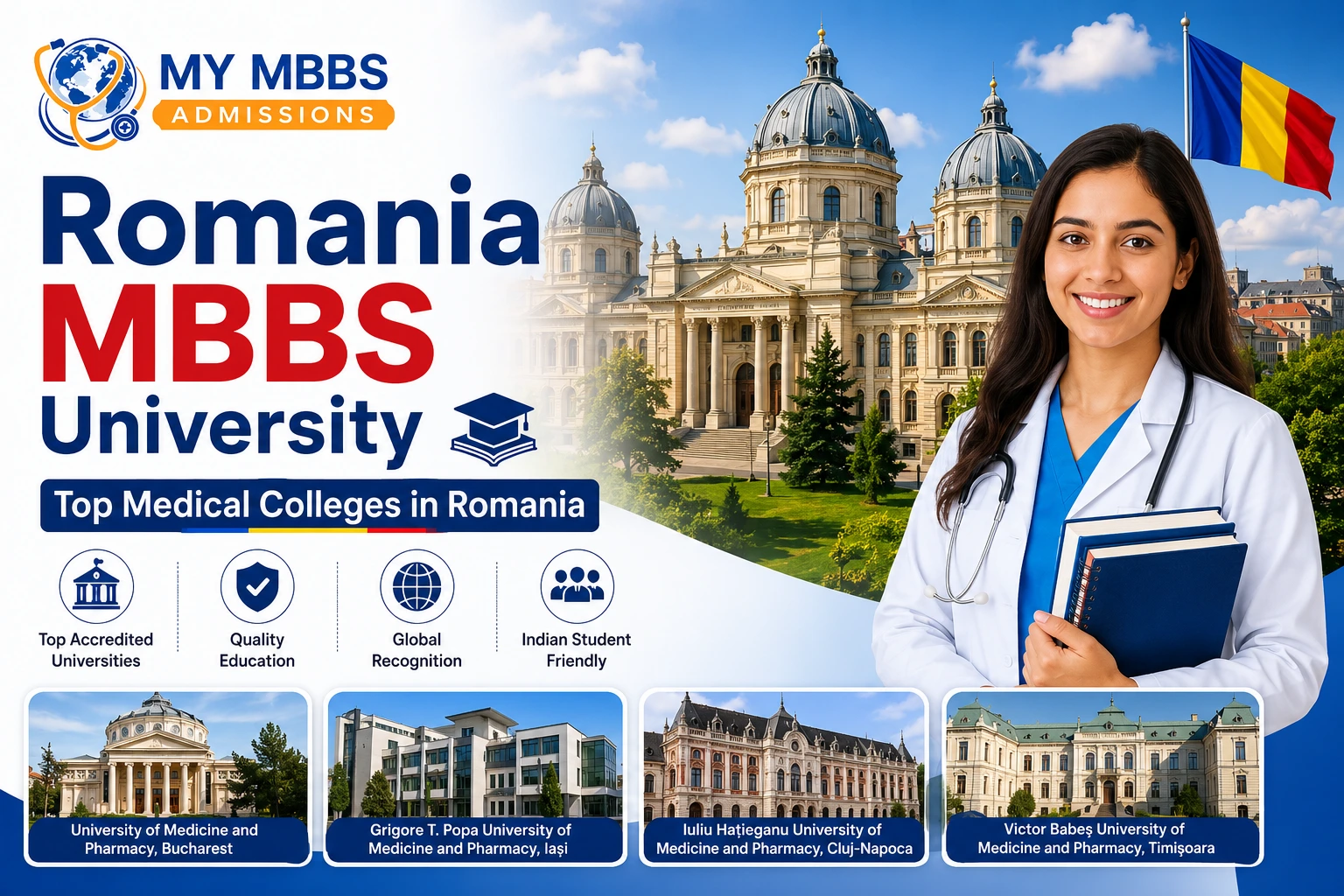
Romania is home to several highly reputed medical universities known for quality education, advanced clinical training, modern infrastructure, and international recognition. Students searching for MBBS in Romania often compare universities based on tuition fees, academic quality, hospital exposure, and student facilities before making decisions.
Most Romanian universities offer six-year MBBS programs in English for international students. The curriculum focuses on both theoretical learning and practical training, ensuring students gain strong medical knowledge and clinical experience.
Romanian universities collaborate with major hospitals and healthcare institutions where students receive practical exposure through clinical rotations and internships. This practical training helps students improve diagnostic skills, patient communication, and medical professionalism.
Another advantage of Romanian universities is multicultural diversity. Students from different countries study together and gain international exposure while building global networks during their educational journey.
| University Name | City | Annual Fees |
|---|---|---|
| Carol Davila University | Bucharest | €7,500–€8,000 |
| Iuliu Hatieganu University | Cluj-Napoca | €6,000–€7,500 |
| Grigore T. Popa University | Iasi | €5,000–€6,500 |
| Victor Babes University | Timisoara | €6,000–€7,000 |
| Ovidius University | Constanta | €5,000–€6,000 |
3.1 Carol Davila University of Medicine and Pharmacy
Located in Bucharest, Carol Davila University is one of the oldest and most prestigious medical universities in Romania. Established in 1857, the university is highly popular among international students because of its advanced medical infrastructure, strong academic reputation, and English-medium MBBS programs. The university provides modern laboratories, simulation centers, research facilities, and extensive hospital-based clinical training.
Key Details
| Particulars | Details |
|---|---|
| Location | Bucharest, Romania |
| Established | 1857 |
| Medium of Teaching | English |
| Course Duration | 6 Years |
| Annual Tuition Fees | €7,500–€10,000 |
| Recognition | NMC, WHO, ECFMG |
| Clinical Exposure | Strong hospital training |
Why Choose Carol Davila University?
- Located in Romania’s capital city with advanced healthcare facilities
- Large international student community
- Modern research-oriented curriculum
- Excellent preparation for USMLE, PLAB, and FMGE/NExT
- Strong practical clinical exposure in affiliated hospitals
3.2 Iuliu Hatieganu University of Medicine and Pharmacy
Iuliu Hatieganu University is one of Romania’s leading medical universities and is located in Cluj-Napoca, one of the country’s most vibrant student cities. The university is known for high academic standards, advanced research facilities, and strong international collaborations. It offers MBBS programs in English and attracts students from more than 50 countries worldwide.
Key Details
| Particulars | Details |
|---|---|
| Location | Cluj-Napoca, Romania |
| Established | 1919 |
| Medium of Teaching | English |
| Course Duration | 6 Years |
| Annual Tuition Fees | €6,000–€7,500 |
| Recognition | NMC, WHO, ECFMG |
| Student Population | Large international community |
Why Choose Iuliu Hatieganu University?
• Strong research and innovation focus
• Modern campus and medical laboratories
• Excellent student support services
• International exchange opportunities
• High-quality practical medical education
3.3 Grigore T. Popa University of Medicine and Pharmacy
Grigore T. Popa University is one of the oldest medical institutions in Romania and was established in 1879. Located in Iasi, the university is recognized for its academic excellence, affordable tuition fees, and strong international presence. It offers English-medium MBBS programs and has students from more than 60 countries. The university follows a practical-oriented teaching approach and provides modern hospital exposure to medical students.
Key Details
| Particulars | Details |
|---|---|
| Location | Iasi, Romania |
| Established | 1879 |
| Medium of Teaching | English |
| Course Duration | 6 Years |
| Annual Tuition Fees | €5,000–€8,000 |
| Recognition | NMC, WHO, ECFMG |
| International Students | 2,800+ |
Why Choose Grigore T. Popa University?
• WFME-accredited medical programs
• No separate entrance exam for many international applicants
• Affordable living expenses in Iasi
• Strong practical and clinical training
• Multicultural international student environment
3.4 Victor Babes University of Medicine and Pharmacy
Victor Babes University of Medicine and Pharmacy is located in Timisoara and is considered one of the top medical universities in western Romania. The university provides internationally recognized MBBS programs in English and focuses heavily on practical medical education, clinical internships, and modern healthcare technologies.
Key Details
| Particulars | Details |
|---|---|
| Location | Timisoara, Romania |
| Established | 1944 |
| Medium of Teaching | English |
| Course Duration | 6 Years |
| Annual Tuition Fees | €6,000–€7,000 |
| Recognition | NMC, WHO, ECFMG |
| Infrastructure | Modern medical facilities |
Why Choose Victor Babes University?
• Student-friendly city and environment
• Excellent practical clinical exposure
• Affordable lifestyle for students
• Modern medical technology and laboratories
• Strong international recognition
3.5 Ovidius University
Ovidius University is a well-known Romanian public university located in Constanta near the Black Sea coast. The university offers affordable MBBS programs in English and provides quality medical education with practical clinical training. International students prefer Ovidius University because of its lower tuition fees, safe environment, and comfortable student lifestyle.
| Particulars | Details |
|---|---|
| Location | Constanta, Romania |
| Established | 1961 |
| Medium of Teaching | English |
| Course Duration | 6 Years |
| Annual Tuition Fees | €5,000–€6,000 |
| Recognition | NMC, WHO, ECFMG |
| Living Costs | Affordable |
Why Choose Ovidius University?
• Budget-friendly MBBS education
• Peaceful coastal city environment
• English-medium medical programs
• Good clinical training opportunities
• Affordable accommodation and living expenses
MCI Approved Medical Colleges in Romania
Indian students planning to study medicine abroad often search for MCI-approved medical colleges in Romania because recognition by the National Medical Commission is extremely important for practicing medicine in India after graduation.
NMC-approved universities allow Indian students to appear for FMGE or NExT examinations after completing their medical education abroad. Romanian medical universities recognized by NMC provide internationally accepted degrees and strong clinical training that help students prepare for licensing examinations effectively.
Students should always verify university recognition status before applying because recognition ensures eligibility for medical practice and postgraduate studies globally.
| University Name | Recognition |
|---|---|
| Carol Davila University | NMC, WHO |
| Iuliu Hatieganu University | NMC, WHO |
| Grigore T. Popa University | NMC, WHO |
| Victor Babes University | NMC, WHO |
| Ovidius University | NMC, WHO |
Student Life in Romania
Romania provides an excellent student lifestyle for international students pursuing medical education. Students enjoy safe environments, affordable living conditions, modern infrastructure, and multicultural experiences while studying abroad.
University hostels provide furnished rooms, internet access, study areas, heating systems, and security facilities. Students can also choose private apartments or shared accommodations depending on their preferences and budgets.
Indian restaurants, grocery stores, transportation systems, shopping centers, cafes, and healthcare facilities are available in most Romanian cities. Students can comfortably adapt to life in Romania while maintaining cultural connections and enjoying European experiences.
Career Opportunities After MBBS from Romania
Graduates from Romanian medical universities have excellent career opportunities globally. Since Romanian degrees are internationally recognized, students can pursue clinical practice, postgraduate studies, research careers, and healthcare management opportunities worldwide.
Indian students can return to India and appear for FMGE or NExT examinations. Many graduates also pursue AMC,USMLE and PLAB examinations for medical practice in the USA and UK, respectively.
Romanian universities emphasise practical clinical exposure and research-oriented education that helps graduates build successful international medical careers.
| Career Path | Opportunities |
|---|---|
| India | FMGE/NExT |
| USA | USMLE |
| UK | PLAB |
| Europe | Clinical Practice |
| Research | Biomedical Sciences |
Conclusion
MBBS in Romania has become one of the most preferred destinations for international medical education because of its affordable tuition fees, globally recognized universities, English-medium programs, and advanced clinical exposure. Students searching for the best Romania MBBS university can find excellent educational opportunities in Romanian medical institutions.
Medical colleges in Romania provide internationally recognized degrees, modern infrastructure, practical hospital training, and global career opportunities at affordable costs. Students benefit from European educational standards, multicultural exposure, and safe student-friendly environments during their academic journey.
With proper university selection and academic dedication, students can build successful medical careers while studying in one of Europe’s most affordable and reliable destinations for medical education.
FAQS
Some of the top Romania MBBS universities include Carol Davila University, Iuliu Hatieganu University, Grigore T. Popa University, Victor Babes University, and Ovidius University because of their global recognition and quality medical education.
Yes, many medical colleges in Romania are recognized by the National Medical Commission (NMC), WHO, and ECFMG, allowing Indian students to appear for FMGE/NExT examinations.
The annual tuition fees in Romanian medical universities generally range between €5,000 and €8,000 depending on the university and city.
Yes, many Romanian universities offer complete English-medium MBBS programs for international students.
The MBBS program in Romania generally lasts 6 years, including practical clinical training and internships.
Yes, Indian students must qualify NEET according to NMC guidelines to study MBBS abroad.