
Table of Contents
- 1. Growing Demand for MBBS in South Korea
- 2. Why South Korea is Becoming a Preferred MBBS Destination
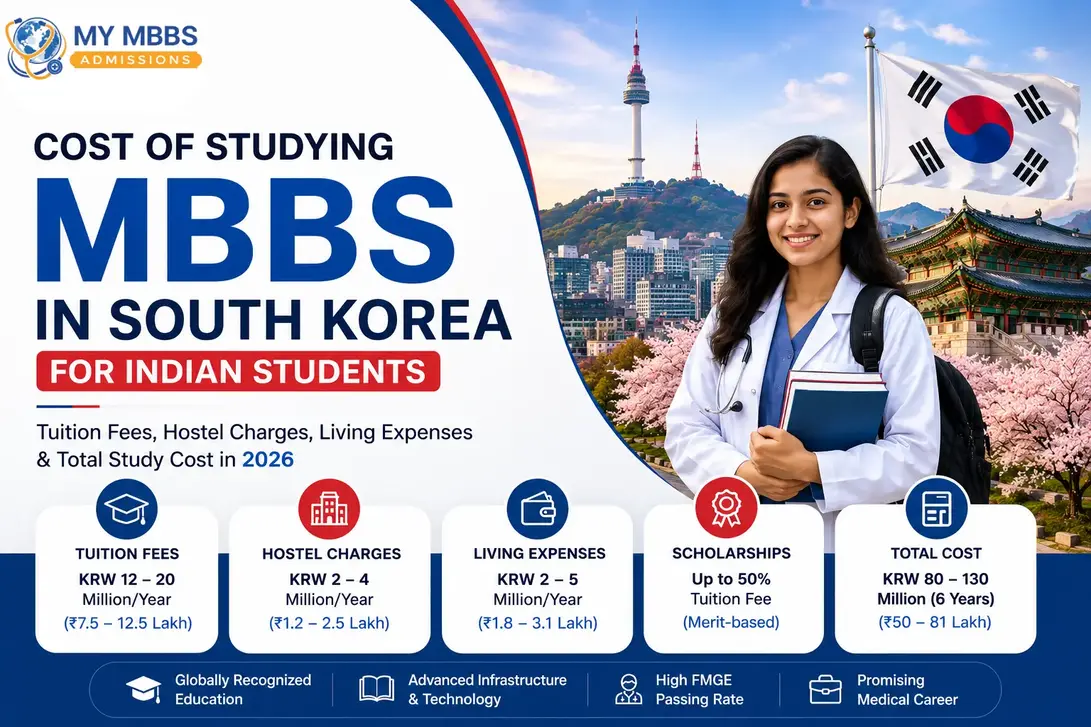
- 3. Complete Tuition Fee Structure for MBBS in South Korea
- 4. Living Cost in South Korea for Indian Students
- 5. Hostel and Accommodation Expenses
- 6. South Korea MBBS Total Expenses – Yearly Breakdown
- 7. Scholarships and Financial Aid for MBBS Students
- 8. Benefits of Scholarships for MBBS Students
- 9. Comparison of MBBS Cost in South Korea with Other Countries
- 10. Best Affordable Cities for Medical Students in South Korea
- 11. Tips to Reduce MBBS Expenses in South Korea
- 12. Conclusion – Is MBBS in South Korea Worth the Cost?
- 13. FAQs
Growing Demand for MBBS in South Korea
In recent years, South Korea has emerged as one of the most preferred destinations for international medical education. Students from India and many other countries are increasingly exploring the cost of MBBS in South Korea because of the country’s advanced healthcare infrastructure, globally recognized universities, and modern teaching methods. The growing popularity of medical education in South Korea reflects the rising demand for quality education combined with international career opportunities.
Before applying to any medical university abroad, students must understand the complete expense structure. The cost of MBBS in South Korea includes tuition fees, hostel accommodation, food expenses, transportation, insurance, and other academic charges. Having detailed knowledge about these expenses helps students and parents create a realistic financial plan for the entire course duration. Understanding the cost of MBBS in South Korea for Indian students is especially important because living expenses and university fees may vary depending on the city and institution selected.
One major reason behind the increasing demand for South Korea is its balance between educational quality and career growth. Although the cost of MBBS in South Korea may appear higher than some other countries, students gain access to technologically advanced laboratories, research-oriented learning, and modern hospitals for clinical training. These advantages make the educational investment worthwhile for many aspiring doctors.
The overall MBBS cost in South Korea depends on several factors such as university type, accommodation preference, and personal lifestyle. However, students often find the experience valuable because of the country’s high educational standards and safe environment for international students. As a result, the cost of MBBS in South Korea for Indian students is increasingly viewed as a long-term investment in a successful medical career.
Overall, the cost of MBBS in South Korea continues to attract Indian students who are seeking high-quality medical education, global exposure, and promising future opportunities in the healthcare sector.
Why South Korea is Becoming a Preferred MBBS Destination
South Korea is home to modern medical universities equipped with advanced laboratories, smart classrooms, and technologically advanced hospitals. Many students researching the cost of MBBS in South Korea are attracted by the country’s high educational standards and innovative medical training systems.
2.1 Key Reasons to Study MBBS in South Korea
- Globally recognized medical universities
- Advanced hospitals and clinical exposure
- Research-oriented medical education
- Safe environment for international students
- Modern healthcare infrastructure
- Better global career opportunities
- High-quality practical training programs
Medical degrees from South Korean universities are globally recognized and respected in many countries. This international recognition improves career opportunities for graduates and makes the cost of MBBS in South Korea for Indian students a worthwhile investment for long-term professional growth.
Students receive excellent clinical exposure through practical hospital training and patient-centered medical education. Universities focus heavily on hands-on learning, helping students gain real-world medical experience during their academic journey.
The cost of studying MBBS in South Korea is often justified by the advanced healthcare infrastructure available in the country. Students get access to modern hospitals, digital medical technology, and highly experienced faculty members that enhance the quality of education significantly.
South Korea also provides outstanding research opportunities in medical science and healthcare innovation. International students can participate in laboratory projects, clinical studies, and research programs that strengthen their academic and professional skills.
Safety is another major reason why students prefer South Korea for medical studies. The country is known for low crime rates, disciplined public systems, and reliable transportation networks, creating a comfortable environment for international students.
Overall, the combination of modern infrastructure, excellent education quality, and international career growth makes the cost of MBBS in South Korea beneficial for aspiring medical professionals seeking global opportunities.
Complete Tuition Fee Structure for MBBS in South Korea
Understanding tuition fees is one of the most important steps for students planning medical education abroad. The cost of MBBS in South Korea depends on several factors such as university type, location, facilities, and academic reputation. Students should carefully compare different universities to estimate the complete course budget and understand the overall South Korea MBBS total expenses before applying.
| University | Annual Tuition Fees | Course Duration | Approx Total Cost |
|---|---|---|---|
| Seoul National University | USD 6,000 – 8,000 | 6 Years | USD 40,000 – 48,000 |
| Yonsei University | USD 8,000 – 12,000 | 6 Years | USD 50,000 – 70,000 |
| Korea University College of Medicine | USD 7,000 – 10,000 | 6 Years | USD 45,000 – 60,000 |
| Kyung Hee University | USD 6,500 – 9,000 | 6 Years | USD 42,000 – 55,000 |
| Pusan National University | USD 5,500 – 8,000 | 6 Years | USD 38,000 – 50,000 |
The cost of MBBS in South Korea is generally lower in government-funded universities compared to private institutions. Public universities receive government support, allowing them to offer more affordable tuition fees for international students. In contrast, private universities may charge higher fees because of advanced infrastructure, specialized medical facilities, and international academic collaborations.
Most universities follow a semester-wise payment structure where students pay tuition fees twice a year. This system helps families manage the cost of MBBS in South Korea for Indian students more efficiently by dividing expenses into smaller installments.
Several factors influence tuition fees in South Korean medical colleges, including:
- University ranking
- City location
- Research facilities
- Clinical training exposure
- International collaborations
- Infrastructure and laboratories
Apart from tuition fees, students should calculate accommodation, transportation, and personal expenses to estimate the complete South Korea MBBS total expenses accurately.
Living Cost in South Korea for Indian Students
Understanding daily living expenses is very important for students planning medical education abroad. Apart from tuition fees, students must also calculate accommodation, food, transportation, and utility costs while estimating the cost of MBBS in South Korea.
The living cost in South Korea for Indian students may vary depending on the city, lifestyle, and type of accommodation selected.
4.1 Hostel Accommodation Charges
Accommodation forms a major part of the living cost in South Korea for Indian students. University hostels are generally more affordable because they provide furnished rooms, internet access, security services, and basic facilities within the campus.
Hostel charges may range between USD 300 to USD 700 per month, depending on room type and university location.
4.2 Transportation and Utility Costs
Transportation expenses in South Korea are relatively affordable because of the country’s efficient public transport system.
Monthly transportation expenses usually range between:
- USD 40 – USD 80 for metro and buses
Utility bills such as electricity, heating, internet, and water charges are additional monthly expenses for students living in private apartments.
Overall, understanding the living cost in South Korea for Indian students helps families estimate the total educational budget more accurately.
4.3 Food and Grocery Expenses
Food expenses also contribute significantly to the living costs in South Korea for Indian students. Students who eat regularly at restaurants may spend more compared to those who cook meals at home.
Ways to reduce food expenses:
- Cook meals at home
- Buy groceries from local supermarkets
- Share cooking with roommates
- Use student cafeterias
- Purchase groceries in bulk
Hostel and Accommodation Expenses
Accommodation is one of the most important factors affecting the overall cost of MBBS in South Korea. International students must carefully compare housing options, utility expenses, and transportation costs before selecting a university.
Major Accommodation Expenses for Students
Hostel Room Charges
University hostels usually cost between USD 300 and USD 700 per month depending on the city and room facilities.
Shared Apartment Benefits
Sharing apartments with roommates is one of the most effective ways to reduce living expenses and overall MBBS cost in South Korea.
Internet and Electricity Costs
Students living in private apartments usually pay separate utility bills, including:
- Electricity
- Heating
- Water
- Internet services
Transportation Expenses
Students living far from campus may spend additional money on buses and metro services.
Budget Management Tips
- Choose shared accommodation
- Cook meals at home
- Avoid unnecessary spending
- Use public transportation
- Apply for scholarships
Overall, accommodation expenses form a major part of the MBBS cost in South Korea, and proper budgeting helps students manage educational costs more efficiently.
5.1 Major Accommodation Expenses for Students
Managing accommodation expenses is an important part of planning MBBS in South Korea. Indian students should consider hostel fees, private rent, food costs, transportation, utilities, and other daily living expenses while estimating their total study budget.
South Korea MBBS Total Expenses – Yearly Breakdown
Understanding the yearly educational budget is essential for students planning medical studies abroad. The cost of MBBS in South Korea includes tuition fees, accommodation expenses, food costs, insurance, transportation, and several additional charges.
| Expense Type | Annual Cost (USD) | Annual Cost (INR) |
|---|---|---|
| Tuition Fees | 6,000 – 12,000 | ₹5,00,000 – ₹10,00,000 |
| Hostel Accommodation | 3,000 – 6,000 | ₹2,50,000 – ₹5,00,000 |
| Food Expenses | 2,000 – 3,500 | ₹1,70,000 – ₹3,00,000 |
| Health Insurance | 300 – 700 | ₹25,000 – ₹60,000 |
| Visa & Documentation | 200 – 500 | ₹17,000 – ₹42,000 |
| Transportation | 500 – 1,000 | ₹42,000 – ₹85,000 |
| Miscellaneous Expenses | 1,000 – 2,000 | ₹85,000 – ₹1,70,000 |
The estimated South Korea MBBS total expenses usually range between USD 12,000 and USD 25,000 annually depending on the university, city, and student lifestyle.
Proper budgeting and financial planning help students manage the cost of MBBS in South Korea for Indian students more effectively.
Scholarships and Financial Aid for MBBS Students
Many international students look for scholarships and financial aid opportunities to reduce the overall cost of MBBS in South Korea. Since medical education abroad can require a significant financial investment, scholarships help students manage tuition fees, accommodation costs, and other educational expenses more comfortably. Several universities and government organizations in South Korea provide financial support programs specifically designed for international students pursuing medical education.
Students applying for the MBBS course in South Korea can benefit from different types of scholarships based on academic performance, financial background, and entrance evaluations. These financial aid programs make medical education more accessible for deserving students and help reduce the financial burden on families.
Popular Scholarship Options
Korean Government Scholarship Program (KGSP)
The Korean Government Scholarship Program is one of the most popular scholarship opportunities for international students. This program may cover:
- Full or partial tuition fees
- Monthly living allowance
- Airfare expenses
- Settlement support
- Medical insurance
The KGSP helps students significantly reduce the cost of MBBS in South Korea for Indian students while providing financial stability throughout the course duration.
University Merit Scholarships
Many universities offering MBBS programs provide merit-based scholarships for students with excellent academic performance. Students with strong marks in Physics, Chemistry, and Biology or outstanding entrance evaluations may receive tuition fee discounts or partial scholarships.
Several institutions among the best MBBS colleges in South Korea encourage talented international students through these scholarship programs.
Need-Based Grants
Some universities and educational organizations also provide need-based grants for students from financially weaker backgrounds. These grants help students manage tuition fees and daily living expenses while pursuing the MBBS course in South Korea.
Tuition Fee Waivers
Certain universities offer tuition fee waivers for high-performing students during the academic program. Students who maintain excellent academic records may continue receiving financial benefits throughout their medical studies.
Education Loans for Indian Students
Indian students can also apply for education loans from banks and financial institutions to cover:
- Tuition fees
- Hostel expenses
- Travel costs
- Insurance charges
- Living expenses
Education loans help students manage the cost of MBBS in South Korea for Indian students more effectively without immediate financial pressure.
Benefits of Scholarships for MBBS Students
Scholarships and financial aid programs offer several advantages, including:
- Reduced tuition burden
- Lower living expenses
- Better financial stability
- Easier access to quality medical education
- Reduced dependence on personal savings
These financial support options make studying in the best MBBS colleges in South Korea more affordable and accessible for international students.
Comparison of MBBS Cost in South Korea with Other Countries
South Korea vs India
Private medical colleges in India can be extremely expensive. In many cases, the cost of MBBS in South Korea is comparable to private medical education in India.
South Korea vs Russia
Russia offers lower tuition fees, but South Korea provides better healthcare infrastructure, research opportunities, and advanced medical technology.
South Korea vs Philippines
The Philippines is affordable, but South Korea offers better infrastructure, stronger research programs, and improved international career opportunities.
Overall, the MBBS cost in South Korea is often considered a long-term investment in quality education and professional success.
Best Affordable Cities for Medical Students in South Korea
Choosing the right city greatly affects the cost of MBBS in South Korea.
Affordable Cities for Students
Seoul
- Best universities and hospitals
- Higher living expenses
- Excellent infrastructure
Busan
- Affordable accommodation
- Lower transportation costs
- Comfortable student lifestyle
Daegu
- Budget-friendly housing
- Lower living expenses
- Good transportation system
Incheon
- Affordable student lifestyle
- Reliable public transport
- Lower accommodation costs
Selecting the right city helps students manage the living cost in South Korea for Indian students more effectively.
Tips to Reduce MBBS Expenses in South Korea
Managing educational expenses properly is extremely important for international students.
Practical Tips to Reduce Expenses
- Use public transportation
- Share apartments with roommates
- Buy groceries in bulk
- Cook meals at home
- Apply for scholarships
- Use student discount cards
- Choose affordable cities
- Control unnecessary spending
Part-time work opportunities are also available for international students under specific visa regulations. These opportunities help students reduce the cost of MBBS in South Korea for Indian students during their studies.
Conclusion – Is MBBS in South Korea Worth the Cost?
South Korea has become one of the leading destinations for international medical education because of its advanced healthcare infrastructure, globally recognized universities, and research-oriented learning environment.
Although the cost of MBBS in South Korea may appear higher than in some other countries, many students consider the investment worthwhile because of the quality of education and strong future career opportunities available after graduation.
The overall South Korea MBBS total expenses include tuition fees, accommodation, transportation, insurance, and other academic costs. However, students also gain access to technologically advanced laboratories, modern hospitals, experienced faculty, and international clinical exposure.
For Indian students seeking global medical exposure, the cost of MBBS in South Korea for Indian students can be a smart investment when supported by proper financial planning. Scholarships, fee waivers, and shared accommodation options help reduce educational expenses and make studying abroad more manageable.
Overall, the cost of MBBS in South Korea should not be viewed only as an educational expense but also as a long-term investment in professional success, international recognition, and future medical career growth.
FAQS
The average cost of MBBS in South Korea usually ranges between USD 12,000 and USD 25,000 per year, depending on the university, accommodation type, and student lifestyle. The total expense includes tuition fees, hostel charges, food, insurance, and transportation.
The cost of MBBS in South Korea for Indian students generally ranges between ₹10 lakhs and ₹20 lakhs annually. The final budget depends on the university selected, city location, and personal living expenses.
The MBBS cost in South Korea is higher than countries like Russia and the Philippines but offers better healthcare infrastructure, advanced medical technology, and globally recognized education. Many students consider it a worthwhile long-term investment.
Tuition fees in South Korean medical universities usually range between USD 6,000 and USD 12,000 per year. Private universities may charge higher fees compared to government-funded institutions.
The living cost in South Korea for Indian students may range between USD 500 and USD 1,200 per month depending on accommodation, food habits, transportation, and lifestyle choices.
Yes, many universities and government organisations offer scholarships and financial aid programs for international students. Popular options include the Korean Government Scholarship Program (KGSP), merit-based scholarships, and tuition fee waivers.
The South Korea MBBS total expenses for the complete course may range between USD 70,000 and USD 150,000, including tuition fees, accommodation, food, insurance, and miscellaneous expenses.
Yes, international students can work part-time under specific visa regulations. Part-time jobs help students manage the cost of studying MBBS in South Korea and support their daily living expenses.
Cities like Busan, Daegu, and Incheon are considered more affordable compared to Seoul. These cities offer lower accommodation and transportation costs for international students.
Yes, South Korea is considered one of the safest countries for international students because of its low crime rate, reliable public transport, and disciplined social environment.
In most universities, hostel and accommodation charges are separate from tuition fees. Students should calculate accommodation, food, transportation, and utility costs separately while planning their budget.
The cost of MBBS in South Korea is often considered worthwhile because students receive advanced medical education, practical clinical exposure, modern research opportunities, and globally recognized degrees that support strong international career growth.